
Django REST Framework vs Odoo API: Which One to Choose?
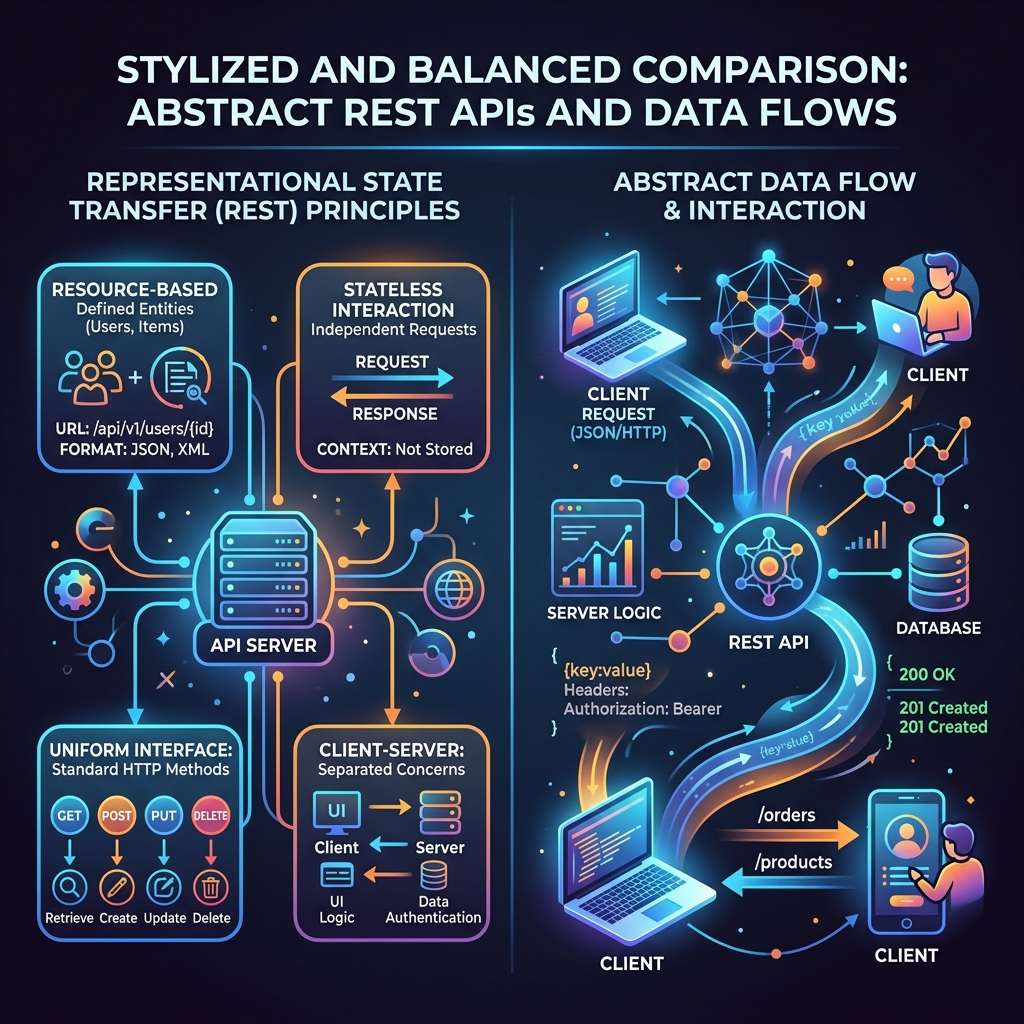
When building integrations or headless architectures, choosing the right backend framework determines your development speed and system robustness. Let's compare Django REST Framework (DRF) and the Odoo External API.
1. Core Philosophy
Django REST Framework: DRF is a powerful and flexible toolkit built explicitly for creating Web APIs. It allows developers to serialize Django ORM data easily and manage complex authentication and permissions setups.
Odoo External API (XML-RPC/JSON-RPC): Odoo's approach to APIs is functional rather than strictly RESTful. It exposes the application's ORM directly through XML-RPC or JSON-RPC. You don’t explicitly write API endpoints; instead, you trigger model methods remotely.
2. Ease of Setup
- DRF: Requires explicit definition of Models, Serializers, Views, and URLs. It takes time to set up, but guarantees exact control over your API contract.
- Odoo: Almost zero setup. If you define a Model in Odoo, it is instantly available via the External API for CRUD operations provided the user has permissions.
3. Data Formatting and Serialization
- DRF: Native JSON. Extensive serialization capabilities allow you to shape payloads exactly as front-end clients need them.
- Odoo: XML-RPC isn't as easily parsed by modern JS frameworks as JSON. While Odoo supports JSON-RPC, the payload structures are very rigid (they follow Odoo's internal tuple formats) and can be unwieldy for generic frontend clients.
4. Routing and Endpoints
- DRF: You design readable, semantic URLs (
/api/v1/customers/). - Odoo: You don't get semantic URLs. You post to endpoints like
/xmlrpc/2/objectpassing the method name (search_read), the model name (res.partner), and the parameters.
5. Ideal Use Cases
Choose Django REST Framework when:
- Building a modern mobile app or a Single Page Application (React/Vue).
- You require deep, complex permissions per endpoint.
- You want total control over the API response structure.
Choose Odoo API when:
- You are connecting Odoo to another backend system (e.g., syncing inventory with an e-commerce platform).
- You are already strictly committed to the Odoo ecosystem.
- You need rapid data ingestion without writing extra API interface code.
Conclusion
If your goal is a standardized, clean RESTful architecture for a decoupled frontend, Django REST Framework is the clear winner. However, for sheer ERP integration and system-to-system automation within a business backend, Odoo's External API is highly efficient.